




Understanding Forex Trading Definition, Concepts, and Best Practices
2025-10-31
Forex trading, or foreign exchange trading, refers to the global marketplace where currencies are bought and sold. It is the largest financial market in the world, operating 24 hours a day, five days a week, and involves participants such as banks, financial institutions, corporations, and individual traders. The primary goal of forex trading is to speculate on the price movement of currency pairs, seeking profits from these transactions. For those looking to navigate this complex landscape effectively, understanding the definition of forex trading is crucial. If you’re considering diving into this market, exploring the forex trading definition Best Platforms for Trading can help you make informed decisions.
What is Forex Trading?
Forex trading is the act of buying one currency while simultaneously selling another, typically in pairs. For example, the EUR/USD pair indicates that you are trading euros against US dollars. The aim is to profit from fluctuations in exchange rates. If you believe that the euro will appreciate against the dollar, you would buy the EUR/USD pair. Conversely, if you think the euro will depreciate, you would sell the pair.
The Mechanics of Forex Trading
Forex trading operates through a network of banks, brokers, and electronic trading platforms, connecting buyers and sellers from all over the globe. The market is decentralized, meaning it does not have a central exchange like stock markets. Instead, trading is facilitated through over-the-counter (OTC) transactions. This structure allows for liquidity and flexibility, accommodating traders of all sizes.
Currency Pairs
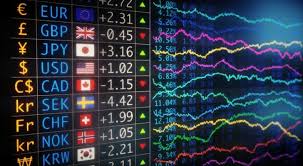
In forex trading, currencies are always quoted in pairs, such as USD/JPY or GBP/AUD. The first currency in the pair is called the base currency, while the second is the quote currency. The exchange rate indicates how much of the quote currency is needed to purchase one unit of the base currency.
The two main types of currency pairs are major pairs (such as EUR/USD, USD/JPY, and GBP/USD) and minor pairs (involving currencies that are less traded). There are also exotic pairs that combine a major currency with a currency from a developing or smaller economy.
Why Trade Forex? Advantages and Disadvantages
Trading forex comes with several advantages:
- High Liquidity: Forex is the most liquid market in the world, with a daily trading volume exceeding $6 trillion.
- 24-Hour Market: Forex trading is available around the clock, offering flexibility for traders across different time zones.
- Leverage: Many brokers offer leveraged trading, allowing traders to control larger positions with a smaller amount of capital.
However, there are also pitfalls to be aware of:
- High Volatility: While volatility can mean opportunities for profit, it also poses a risk of significant losses.
- Complex Analysis: Forex trading requires a strong understanding of various factors such as economic indicators and geopolitical events.
- Potential for Fraud: The decentralized nature of forex can make it susceptible to scams if traders do not choose reliable brokers.
Key Concepts in Forex Trading
Several key concepts underpin successful forex trading:
1. Pips and Spreads
A pip is the smallest price movement in a currency pair, typically the fourth decimal place. The spread is the difference between the buy (ask) and sell (bid) prices, representing the broker’s profit.
2. Margin and Leverage
Margin is the amount of capital required to open and maintain a leveraged position. Leverage allows traders to magnify their potential returns but also increases exposure to risk.
3. Technical and Fundamental Analysis
Traders use technical analysis, which focuses on price charts and indicators, and fundamental analysis, which studies economic and political factors, to make informed trading decisions.
Developing a Forex Trading Strategy
Successful forex trading often hinges on a well-thought-out strategy. This involves:
- Defining trading goals
- Choosing a trading style (day trading, swing trading, scalping)
- Utilizing risk management techniques (stop-loss orders, position sizing)
- Continuously analyzing market conditions and adjusting strategies accordingly
Conclusion
In conclusion, understanding the definition of forex trading and its mechanisms is paramount for anyone interested in participating in the foreign exchange market. While the potential for profits is significant, so too are the risks involved. Education, a sound trading strategy, and selecting the right trading platform can pave the way for success in this dynamic arena. As you embark on your forex trading journey, remember to continuously learn and adapt to the market’s ever-changing landscape.
Warning: mysqli_query(): (HY000/1194): Table 'wp_posts' is marked as crashed and should be repaired in /www/wwwroot/friderm.com/wp-includes/class-wpdb.php on line 2353
None.
Warning: mysqli_query(): (HY000/1194): Table 'wp_posts' is marked as crashed and should be repaired in /www/wwwroot/friderm.com/wp-includes/class-wpdb.php on line 2353
None.